Follow

Showing posts with label Fairytale. Show all posts
Showing posts with label Fairytale. Show all posts
Wednesday, June 4, 2014

by McCormick Templeman
Death hasn't visited Rowan Rose since it took her mother when
Rowan was only a little girl. But that changes one bleak morning, when five
horses and their riders thunder into her village and through the forest,
disappearing into the hills. Days later, the riders' bodies are found, and
though no one can say for certain what happened in their final hours, their
remains prove that whatever it was must have been brutal.
Review: A confession: some scenes in this book gave me the creeps. Seriously, the up late reading-what was that noise-suspicious look all around the room creeps. That’s how engrossing I found the writing to be. The Glass Casket is a great example of how frequently used story elements (fairytales, etc.) can be used as a starting point for a story that’s unique. Though certain details of the novel seem designed to evoke the Snow White that received the Disney treatment, the plot is loosely based on the less well known Grimm tale Snow White and Rose Red.
One of the
novel’s greatest strengths is the world building. We are introduced the small
mountain community of Nag’s End, set in a fantastical reality with technology
equivalent to 14th century Europe and a history of dark magic largely
lost to time and engulfed in superstition.
Citizens of Nag’s End have their own traditions, religions, and a patriarchal
style of government. They largely ignore their rulers located in a city several
miles away, until the bizarre incident of the deaths of the riders of the city.
This sets off a series of grisly and tragic events.
The four
teenagers that are at the center of this story are Rowan, a girl with a gift
for translating historical documents, her best friend Tom, Tom’s brother Jude,
and the new-in-town Fiona Eira. Their
messy and complicated relationships serve as an emotional counterpoint to the
horror slowing building in the village. These characters are individuals and
very well drawn. Another point in the novel’s favor is that while it portrays
an archaic society in which men hold power, it also shows the very harmful
effects this structure has on the women living under it. Rowan, one of the
smartest characters in the story, figures out what is really going on but finds
herself disregarded and entrapped. The consequences are dire.
Throughout
the first half of the book I found that I was kept guessing, not knowing in
which direction the narrative was going to turn. This is a feeling I find
increasingly rare the more books I read, so I appreciated it. The story ends on
a satisfying note, but if McCormick Templeman sets any future books in this
world, I’d be happy to read them.
5 Stars

Saturday, May 24, 2014

by Merrie Haskell
Thirteen-year-old Princess Matilda,
whose lame foot brings fear of the evil eye, has never given much thought to
dragons, attending instead to her endless duties and wishing herself free of a
princess's responsibilities.
When a greedy cousin steals Tilda's
lands, the young princess goes on the run with two would-be dragon slayers.
Before long she is facing down the Wild Hunt, befriending magical horses, and
battling flame-spouting dragons. On the adventure of a lifetime, and caught
between dreams of freedom and the people who need her, Tilda learns more about
dragons—and herself—than she ever imagined.
Merrie Haskell, author of The
Princess Curse, presents a magical tale of transformation, danger, and duty, starring
a remarkable princess as stubborn as she is brave.
Review: Handbook for Dragon Slayers is an
engaging fantasy story featuring a disabled heroine who is completely awesome. Matilda, or Tilda, a girl who only
wants to be alone with her beloved books, is constantly interrupted by her responsibilities
as manager of the estate while her mother is away. When her treacherous cousin
succeeds in deposing her and she is forced to go on the run, she views it as a
relief. She can finally escape the people who, due to her clubfoot,
view her as bad luck and unfit to be a ruler. Rather than plan a way to retake
her estate, Matilda embarks on a dragon-slaying adventure with her friends in order to get material to write a book of her own.
Tilda
is a complex heroine who is smart and brave while having some very human flaws.
Her clubfoot is painful and often forces her to rely on her companions for
assistance, and the poor way some of her superstitious subjects treat her has shaped her insecurities. However, she is a character who can
think her way out of most tricky situations and whose kindness and compassion
serve her well on her journey. Judith, her maid and best friend, is a character
who is great in her own right. Far from being the stereotypical obedient
servant, Judith is not afraid to tell Tilda harsh truths and it is
she who has the initial yearning for adventure. Rounding out the team is
Parz, the knight in training Tilda has a crush on and whom Judith relies
on for dragon-slaying instruction. Refreshingly, a love triangle between the
trio never materializes.
The story itself is a blend of fairytales elements with historical details including the role of noblewomen as
administrators, convents as stand-ins for places of learning, etc. One classic fairytale in particular is used, and I will not spoil the surprise but I did enjoy how it was handled. Through these various adventures Tilda and her friends come to realize that dragon slaying is very different from what they imagined and learn you cannot escape your responsibilities. In a way that is not at all overtly preachy or didactic, Tilda comes to reconcile her own wishes with her responsibilities and accepts her duty to her people. All in all, this is a great read for anyone who loves fairytales, historical fantasy, and dynamic characters.
4.5 Magical horses
Monday, May 19, 2014
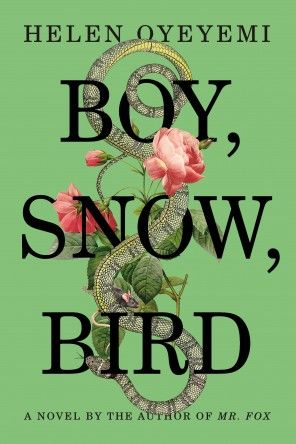
By Helen Oyeyemi
In the winter of 1953, Boy Novak
arrives by chance in a small town in Massachusetts, looking, she believes, for
beauty—the opposite of the life she’s left behind in New York. She marries a
local widower and becomes stepmother to his winsome daughter, Snow Whitman.
A
wicked stepmother is a creature Boy never imagined she’d become, but elements
of the familiar tale of aesthetic obsession begin to play themselves out when
the birth of Boy’s daughter, Bird, who is dark-skinned, exposes the Whitmans as
light-skinned African Americans passing for white.
Among them, Boy, Snow, and
Bird confront the tyranny of the mirror to ask how much power surfaces really
hold.
Dazzlingly inventive and powerfully moving, Boy, Snow, Bird is
an astonishing and enchanting novel. With breathtaking feats of imagination,
Helen Oyeyemi confirms her place as one of the most original and dynamic
literary voices of our time.
Review: I picked up Boy, Snow, Bird for a variety of reasons: I had heard positive buzz about it, I'm been reading more literary fiction, I'd made a decision to seek out more authors of color, and if there's one thing I love it's a good fairytale retelling. Whatever my reasons, I'm so glad I read this book. I cannot praise it enough. The writing is beautiful, the characters are multidimensional and portrayed with empathy, the POVs are distinctive, and the themes of race, beauty, and identity, are explored in depth.
I loved this novel down to its sentences and the wry humor they frequently conveyed. One example:
"I couldn't make up my mind whether the baby was male or female; the only certainties were near baldness and incandescent rage. The kid didn't like its blanket, or its rattle, or the lap it was sat on, or the world…the time had come to demand quality."The characters are far from the stereotypical archetypes that can be found in the Snow White tale. Boy, the evil stepmother of the story, is a damaged individual with a strong capacity for love who wants to protect her daughter at any cost. Snow, initially the sheltered favorite of her extended family, is sent away to her relatives in the south and faces the reality of racism and segregation. Bird, Boy's daughter and the second POV, shows wit and inquisitiveness as she pursues answers to the question of her exiled half-sister. These characters, plus a hint of magical realism in the use of mirrors, made for an enriching read.
A caveat: I found a revelation at the end of the novel to be problematic. For the sake of a spoiler free review I won't go into details, but I will say that though I see how this reveal/explanation fit thematically, on a representational basis it's troubling, even filtered through Boy's POV. I welcome discussion of this point.
4.5 Unreliable Mirrors
Subscribe to:
Posts (Atom)
Showing posts with label Fairytale. Show all posts
Showing posts with label Fairytale. Show all posts
Wednesday, June 4, 2014
Review: The Glass Casket by McCormick Templeman
by McCormick Templeman
Death hasn't visited Rowan Rose since it took her mother when
Rowan was only a little girl. But that changes one bleak morning, when five
horses and their riders thunder into her village and through the forest,
disappearing into the hills. Days later, the riders' bodies are found, and
though no one can say for certain what happened in their final hours, their
remains prove that whatever it was must have been brutal.
Review: A confession: some scenes in this book gave me the creeps. Seriously, the up late reading-what was that noise-suspicious look all around the room creeps. That’s how engrossing I found the writing to be. The Glass Casket is a great example of how frequently used story elements (fairytales, etc.) can be used as a starting point for a story that’s unique. Though certain details of the novel seem designed to evoke the Snow White that received the Disney treatment, the plot is loosely based on the less well known Grimm tale Snow White and Rose Red.
One of the
novel’s greatest strengths is the world building. We are introduced the small
mountain community of Nag’s End, set in a fantastical reality with technology
equivalent to 14th century Europe and a history of dark magic largely
lost to time and engulfed in superstition.
Citizens of Nag’s End have their own traditions, religions, and a patriarchal
style of government. They largely ignore their rulers located in a city several
miles away, until the bizarre incident of the deaths of the riders of the city.
This sets off a series of grisly and tragic events.
The four
teenagers that are at the center of this story are Rowan, a girl with a gift
for translating historical documents, her best friend Tom, Tom’s brother Jude,
and the new-in-town Fiona Eira. Their
messy and complicated relationships serve as an emotional counterpoint to the
horror slowing building in the village. These characters are individuals and
very well drawn. Another point in the novel’s favor is that while it portrays
an archaic society in which men hold power, it also shows the very harmful
effects this structure has on the women living under it. Rowan, one of the
smartest characters in the story, figures out what is really going on but finds
herself disregarded and entrapped. The consequences are dire.
Throughout
the first half of the book I found that I was kept guessing, not knowing in
which direction the narrative was going to turn. This is a feeling I find
increasingly rare the more books I read, so I appreciated it. The story ends on
a satisfying note, but if McCormick Templeman sets any future books in this
world, I’d be happy to read them.
5 Stars
Saturday, May 24, 2014
Review: Handbook for Dragon Slayers
by Merrie Haskell
Thirteen-year-old Princess Matilda,
whose lame foot brings fear of the evil eye, has never given much thought to
dragons, attending instead to her endless duties and wishing herself free of a
princess's responsibilities.
When a greedy cousin steals Tilda's
lands, the young princess goes on the run with two would-be dragon slayers.
Before long she is facing down the Wild Hunt, befriending magical horses, and
battling flame-spouting dragons. On the adventure of a lifetime, and caught
between dreams of freedom and the people who need her, Tilda learns more about
dragons—and herself—than she ever imagined.
Merrie Haskell, author of The
Princess Curse, presents a magical tale of transformation, danger, and duty, starring
a remarkable princess as stubborn as she is brave.
Review: Handbook for Dragon Slayers is an
engaging fantasy story featuring a disabled heroine who is completely awesome. Matilda, or Tilda, a girl who only
wants to be alone with her beloved books, is constantly interrupted by her responsibilities
as manager of the estate while her mother is away. When her treacherous cousin
succeeds in deposing her and she is forced to go on the run, she views it as a
relief. She can finally escape the people who, due to her clubfoot,
view her as bad luck and unfit to be a ruler. Rather than plan a way to retake
her estate, Matilda embarks on a dragon-slaying adventure with her friends in order to get material to write a book of her own.
Tilda
is a complex heroine who is smart and brave while having some very human flaws.
Her clubfoot is painful and often forces her to rely on her companions for
assistance, and the poor way some of her superstitious subjects treat her has shaped her insecurities. However, she is a character who can
think her way out of most tricky situations and whose kindness and compassion
serve her well on her journey. Judith, her maid and best friend, is a character
who is great in her own right. Far from being the stereotypical obedient
servant, Judith is not afraid to tell Tilda harsh truths and it is
she who has the initial yearning for adventure. Rounding out the team is
Parz, the knight in training Tilda has a crush on and whom Judith relies
on for dragon-slaying instruction. Refreshingly, a love triangle between the
trio never materializes.
The story itself is a blend of fairytales elements with historical details including the role of noblewomen as
administrators, convents as stand-ins for places of learning, etc. One classic fairytale in particular is used, and I will not spoil the surprise but I did enjoy how it was handled. Through these various adventures Tilda and her friends come to realize that dragon slaying is very different from what they imagined and learn you cannot escape your responsibilities. In a way that is not at all overtly preachy or didactic, Tilda comes to reconcile her own wishes with her responsibilities and accepts her duty to her people. All in all, this is a great read for anyone who loves fairytales, historical fantasy, and dynamic characters.
4.5 Magical horses
Monday, May 19, 2014
Review: Boy, Snow, Bird
By Helen Oyeyemi
In the winter of 1953, Boy Novak
arrives by chance in a small town in Massachusetts, looking, she believes, for
beauty—the opposite of the life she’s left behind in New York. She marries a
local widower and becomes stepmother to his winsome daughter, Snow Whitman.
A
wicked stepmother is a creature Boy never imagined she’d become, but elements
of the familiar tale of aesthetic obsession begin to play themselves out when
the birth of Boy’s daughter, Bird, who is dark-skinned, exposes the Whitmans as
light-skinned African Americans passing for white.
Among them, Boy, Snow, and
Bird confront the tyranny of the mirror to ask how much power surfaces really
hold.
Dazzlingly inventive and powerfully moving, Boy, Snow, Bird is
an astonishing and enchanting novel. With breathtaking feats of imagination,
Helen Oyeyemi confirms her place as one of the most original and dynamic
literary voices of our time.
Review: I picked up Boy, Snow, Bird for a variety of reasons: I had heard positive buzz about it, I'm been reading more literary fiction, I'd made a decision to seek out more authors of color, and if there's one thing I love it's a good fairytale retelling. Whatever my reasons, I'm so glad I read this book. I cannot praise it enough. The writing is beautiful, the characters are multidimensional and portrayed with empathy, the POVs are distinctive, and the themes of race, beauty, and identity, are explored in depth.
I loved this novel down to its sentences and the wry humor they frequently conveyed. One example:
"I couldn't make up my mind whether the baby was male or female; the only certainties were near baldness and incandescent rage. The kid didn't like its blanket, or its rattle, or the lap it was sat on, or the world…the time had come to demand quality."The characters are far from the stereotypical archetypes that can be found in the Snow White tale. Boy, the evil stepmother of the story, is a damaged individual with a strong capacity for love who wants to protect her daughter at any cost. Snow, initially the sheltered favorite of her extended family, is sent away to her relatives in the south and faces the reality of racism and segregation. Bird, Boy's daughter and the second POV, shows wit and inquisitiveness as she pursues answers to the question of her exiled half-sister. These characters, plus a hint of magical realism in the use of mirrors, made for an enriching read.
A caveat: I found a revelation at the end of the novel to be problematic. For the sake of a spoiler free review I won't go into details, but I will say that though I see how this reveal/explanation fit thematically, on a representational basis it's troubling, even filtered through Boy's POV. I welcome discussion of this point.
4.5 Unreliable Mirrors
Subscribe to:
Posts (Atom)
